Social Security Disability Insurance: Your Guide to SSDI Benefits

Atticus offers free, high-quality disability advice for Americans who can't work. Our team of Stanford and Harvard trained lawyers has a combined 15+ years of legal experience, and have helped over 10,000 Americans apply for disability benefits.
Key takeaways
Social Security Disability Insurance (SSDI) provides critical financial and healthcare support. SSDI offers monthly payments and Medicare coverage to people who cannot work due to a qualifying medical condition, making it a vital safety net for millions of Americans.
Social Security Disability Insurance eligibility depends on both medical and work history requirements. To qualify for SSDI, you must have a serious, long-term disability and sufficient work credits from paying Social Security taxes—meeting both criteria is essential for approval.
The application process is complex and often challenging. Applying for SSDI involves strict rules and multiple steps, and many applicants face delays or denials, making guidance valuable in improving approval chances.
If you cannot work because of a medical condition, you may qualify for monthly payments and health insurance from the federal government’s Social Security program.
Not everyone with a serious condition is eligible, and government rules can make qualifying a nightmare. At Atticus, we help cut through the red tape and get you the benefits you need.
We’ll help you determine your eligibility for Social Security Disability Insurance and what to do next.
Jump to:
What is Social Security Disability Insurance?
Social Security Disability Insurance (SSDI) is a government program that provides benefits to Americans who can’t work due to a medical condition. About 7 million disabled workers receive SSDI today, and about 2% of every U.S. paycheck goes to fund the program via taxes.
Social Security Disability Insurance benefits
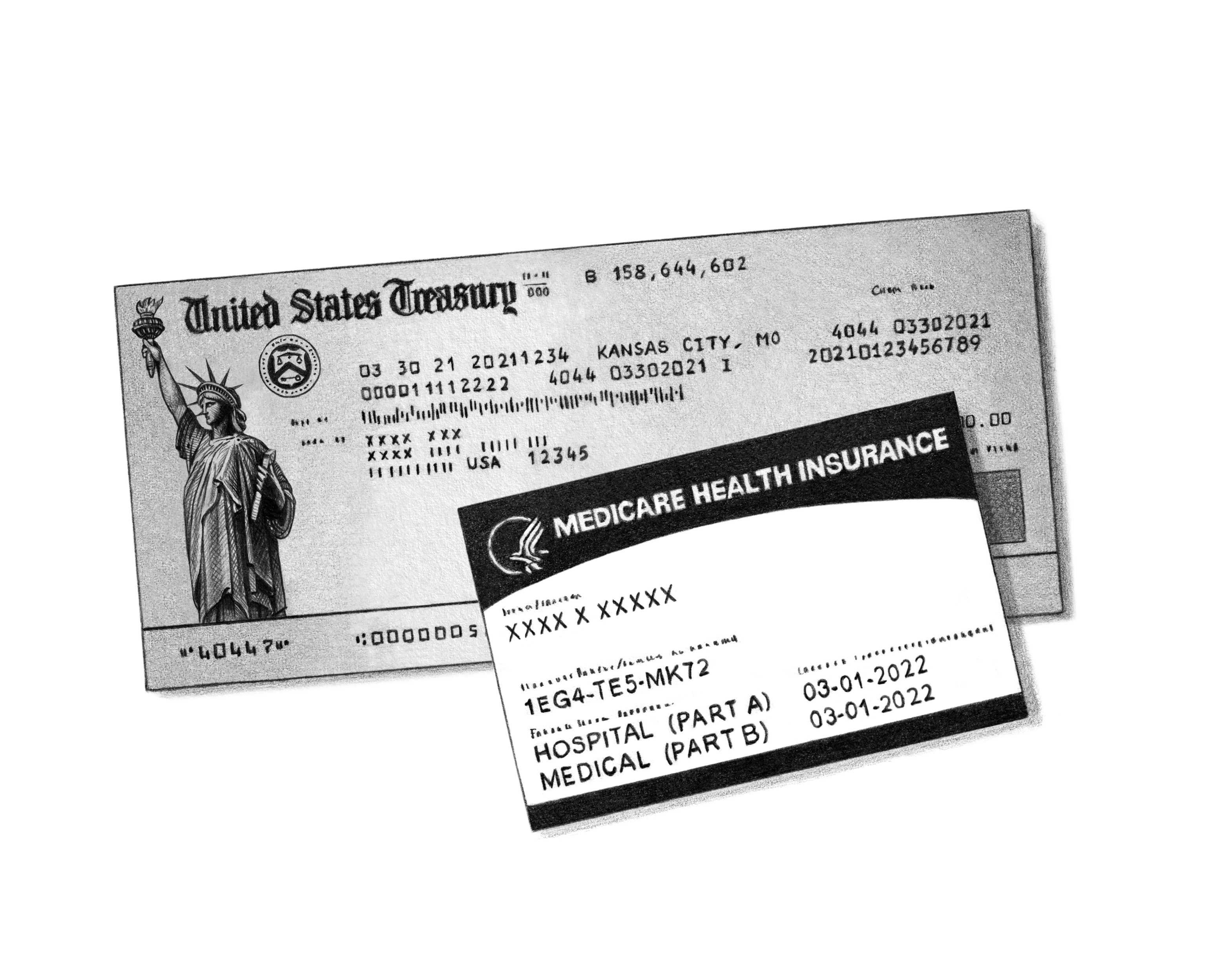
SSDI beneficiaries receive monthly payments and are automatically eligible for Medicare after a waiting period. For people with disabilities, Social Security disability benefits can be life-changing.
SSDI Eligibility: Who Qualifies for Social Security Disability Insurance?
Qualifying for SSDI is never easy: The government treats claims with suspicion and rejects most applicants. To be eligible, you must meet the criteria below:
You’re under 67 years old (full retirement age).
You’re getting treatment for a serious medical condition.
Because of your medical condition, you can’t realistically hold a job.
You’re not currently working (or if you are, it does not qualify as substantial gainful activity).
You’re not expected to recover (or be able to work) within a year.
You have enough work credits and have paid Social Security taxes.
SSDI is one of two federal disability programs. You might qualify for a related program called Supplemental Security Income (SSI) if you have a limited work history and few assets.
Learn more about the SSDI vs SSI and how much does SSI and SSDI pay together.
Medical conditions that qualify for disability benefits
If you have a medical condition that makes it impossible to work and are getting treatment from a doctor, you may qualify for disability benefits. If you can work or aren’t getting much treatment, you probably won’t qualify.
The Social Security Administration’s Listing of Impairments, also known as the Blue Book, outlines some conditions that meet the SSA’s definition of disability and provides eligibility requirements for specific conditions. But this isn’t the only way to win benefits.
The formal guidelines are complicated, but it boils down to this: If your condition has a big impact on your life, even though you’re getting treatment, and as a result, you just can’t hold a job, you’ll probably medically qualify with proper help.
Read our in-depth guide on qualifying medical conditions for more information.
How many work credits do you need for SSDI?
To qualify for SSDI, people over 30 generally need 40 work credits, 20 of which were earned in the last 10 years ending with the year you became disabled. In 2027, you earn one credit for every $1,970 in your paycheck, whether from wages or self-employment income. You can earn up to four credits per calendar year, capping out when you reach $7,880. Younger people, 30 and under, generally need fewer than 40 credits.
You can create an SSA account on the SSA’s official website (ssa.gov) to check your number of work credits and eligibility.
Check out our full guide on work credits, including information for state employees, nonprofit workers, and self-employed applicants.
If you don’t have enough work credits for SSDI, you can consider applying for SSI.
What is SGA?
Substantial gainful activity is a limit on the amount of work someone can do and earnings someone can have and and still be considered disabled by Social Security. In 2027, the SGA limit is $1,770 per month, or $2,950 if you’re blind.
Learn more about what income counts toward SGA with our in-depth article.
How Much Can You Make on Social Security Disability?
SSDI beneficiaries receive a monthly check, up to $4,188 in 2027, with the average monthly amount of disability payments being about $1,701.
Disability recipients also receive a lump sum of back pay or retroactive benefits for the time they were disabled and waiting for benefits.
Your monthly benefits payment depends on your employment history, earnings, and how much you’ve paid in Social Security taxes during your working years.
Read more about how SSDI payments and back pay are calculated.
What other benefits can I get with SSDI?
SSDI beneficiaries can also get other benefits, including extra money for some members of your family, discharge of student loan debt, and an easier time qualifying for certain state or local programs. There’s no downside to receiving SSDI benefits, and it’s free to apply.
For more information, read our guide on other benefits available to SSDI beneficiaries.
When Should I Apply for Disability Benefits?
You should apply as soon as it is clear that your condition will last for a year and that you have the evidence to prove it. Sometimes, that takes a while to figure out. Your doctor may need to run tests and try various treatments before they know how long your condition will last.
Other times, it is clear right away that a disability is long-lasting. Once your doctor is pretty sure that your condition will keep you out of work for a full year, there is no reason to wait to apply for benefits.
Atticus exists to help people navigate this process — so the easiest thing to do is get free advice tailored to your situation via our online tools or caring staff. (People love us, and we don’t charge anything for our help.)
How To Apply for SSDI?
The government fears people will exaggerate their medical problems to get early access to their Social Security. So it puts every applicant under a microscope. To win, you have to prove that your medical condition is severe and disabling.
There are two major stages in the application process, and most people will need to go through both:
Initial application: You submit a lengthy written application, details on past work and treatment, and copies of your medical records. A government staffer at a state agency reads your file and makes a decision. (Only 33% of people win at this stage; the majority are denied.)
Appeals: If you lose, you can appeal the denial and likely have to attend a hearing with a judge. You submit additional evidence at the hearing, speak to the judge directly, and cross-examine government experts. (Among people who make it to the hearing stage, about 50% win. If you lose, there are a few more stages of appeal.)
Read more about the disability application process step by step.
How long does it take to get approved for disability benefits?
Unfortunately, the process takes 7 to 8 months to get an initial decision and can take 1 to 2 years (or more) to get a hearing. Even a small mistake or omission (such as a doctor failing to submit records or a wrong answer on a form) can doom an application.
The good news is that once you win – even if it takes a long time and several appeals – you get “back pay” (retroactive benefits) for the time you should have been getting benefits.
Read our breakdown of how long each stage of the application process can take.
Do I Need a Disability Lawyer?
Because the process is complicated, most successful applicants get a lawyer (or trained non-lawyer representative) to help. Lawyers will pull together your medical records, help with your application, advise you on getting proper medical treatment, submit all the paperwork, and (if needed) argue your case before a judge.
There are two big upsides to hiring a lawyer:
Lawyers do almost all the work for you and hold your hand through the process.
Lawyers increase your chance of winning. (Government studies show that people with a lawyer are three times as likely to qualify at the hearing stage.)
Should I hire a disability attorney?
Most applicants should hire a lawyer or other professional. (There are exceptions — see, for example, our articles on Huntington’s disease or pancreatic cancer.)
Why? The government treats all but the most serious conditions with skepticism. Having expert assistance can make all the difference. There are only a handful of situations where we tell people to consider applying on their own:
If your condition is so severe that no one — not even the most skeptical judge — would believe you could hold a job. (This is the case if you have a terminal condition, or you’re seeing a specialist often, and still have extremely serious limitations, and need a lot of help in your daily life, and you haven’t worked in years.) If this is the case, you can likely win on your own if you feel comfortable with government paperwork (about the same as filing taxes) and requesting medical records.
If you can’t convince a lawyer to take your case. Sadly, this can happen; finding a lawyer to represent you can be difficult if your case is unlikely to be won. (Though we recommend calling us before you give up!) In this case, you can apply on your own and then try again to find a lawyer once you’ve been denied once — at which point it’s often easier.
How much does a disability lawyer cost?
Disability lawyers aren’t allowed to charge an up-front fee, so it doesn’t matter if you can afford one. If they win your case, they get 25% of any retroactive benefits they win for you. This is worth it for almost everyone — you only pay if you win (if you lose, you pay nothing), you pay only once, and the cost pales in comparison to what you get.
Get help with your disability application
Atticus is a new kind of law firm that helps you navigate disability claims. We help you choose the right approach, find the right lawyer, and get on with your life. We won’t charge you a dime for our services unless you win, and even then the fee is simple and government-regulated, so there’s no risk to you.
Frequently asked questions about disability benefits
What do you get with disability benefits?
How much do disability benefits pay?
SSDI pays up to $4,152 per month in 2026, but the average SSDI check is around $1,600. Your exact check is based on your income and tax history. SSI pays up to $994 per month, with your other monthly income subtracted from that maximum amount to find your benefit amount.
When should I apply for disability benefits?
We recommend you apply for benefits as soon as you know you’ll be unable to work. The application process can take a while — a year or longer for the average person. The sooner you submit your application, the sooner you can get benefits.
Do I need a lawyer to apply for disability benefits?
Not technically, but hiring one is worthwhile for most applicants. The SSA denies most initial applications and a lawyer increases your chances of winning an appeal. If you’re applying for state benefits or private disability benefits, you probably don’t need a lawyer.
Are there other types of disability benefits?
Beside Social Security disability, there are short-term disability benefits for people in a very small number of states. Injured workers can access workers’ comp and veterans can apply for VA disability. Anyone who already had a private disability insurance plan can also file a claim for those benefits. Learn more about the types of disability benefits.
Related resources:
What Conditions Qualify for Disability?

Everything You Should Know About Disability Benefits (SSDI and SSI)

Jackie Jakab
Attorney
For Clients
For press inquiries, please email press@atticus.com.
Fields of Law
For Lawyers
At the bottom of many websites, you'll find a small disclaimer: "We are not a law firm and are not qualified to give legal advice." If you see this, run the other way. These people can't help you: they're prohibited by law from giving meaningful advice, recommending specific lawyers, or even telling you whether you need a lawyer at all.
There’s no disclaimer here: Atticus is a law firm, and we are qualified to give legal advice. We can answer your most pressing questions, make clear recommendations, and search far and wide to find the right lawyer for you.
Two important things to note: If we give you legal advice, it will be through a lawyer on our staff communicating with you directly. (Don't make important decisions about your case based solely on this or any other website.) And if we take you on as a client, it will be through a document you sign. (No attorney-client relationship arises from using this site or calling us.)
- © 2026 Atticus Law, P.C.
Terms | Privacy | California Privacy | CHD Policy | Disclaimer | This website is lawyer advertising.