Is Kidney Disease a Disability? How to Qualify for Social Security Benefits

Atticus offers free, high-quality disability advice for Americans who can't work. Our team of Stanford and Harvard trained lawyers has a combined 15+ years of legal experience, and have helped over 10,000 Americans apply for disability benefits.
If kidney disease makes it difficult or impossible for you to work, you may qualify for Social Security disability benefits. In severe cases, kidney disease can be considered a disability, giving you access to monthly payments and government-funded healthcare.
According to the latest Social Security Administration (SSA) data (2024), released in 2025, 155,963 workers receive disability benefits for kidney disease and related conditions. Read on to understand the criteria you’ll need to meet during the disability application process.
Key Takeaways
Kidney disease can qualify as a disability if it is severe enough to prevent you from working, especially in cases involving kidney damage, dialysis, or transplant.
To get approved for disability benefits, you must provide strong medical evidence, including lab results, symptoms like anemia, bone pain, or shortness of breath, and documentation of functional limitations.
You may be eligible for SSDI benefits or SSI benefits, and working with a disability attorney can improve your chances of approval.
Is kidney disease a disability?
Yes, kidney disease can be considered a disability under certain federal programs and laws:
Social Security Administration (SSA): Kidney disease may qualify as a disability if it is severe enough to prevent you from working and meets SSA medical criteria.
Americans with Disabilities Act (ADA): The ADA is a federal law that protects people with kidney disease from discrimination if the condition substantially limits one or more major life activities.
How the SSA defines kidney disease
The Social Security Administration (SSA) defines kidney disease as an impairment of kidney function, meaning the kidneys gradually lose their ability to work properly over time. This condition is often referred to as chronic kidney disease (CKD) in SSA documents.
Kidney disease may result from a specific disorder affecting the kidneys or from complications of other conditions, such as diabetes, high blood pressure, stroke, or congestive heart failure, which can lead to long-term kidney damage.
In the SSA Blue Book, kidney disease is evaluated under Section 6.00 – Genitourinary Disorders, which outlines the medical criteria used to determine disability eligibility under disability law.
5 types of kidney disease that can qualify
Multiple forms of chronic kidney disease can qualify for disability benefits, including chronic glomerulonephritis, hypertensive nephropathy, diabetic nephropathy, chronic obstructive uropathy, and hereditary nephropathies.
Your CKD may also qualify under SSA guidelines if it’s a result of a kidney transplant (for up to one year), if you are undergoing dialysis treatment because of it, or if the kidney disease is a result of other health conditions.
Other diagnoses covered by Social Security disability benefits include:
Renal osteodystrophy
Peripheral neuropathy
Anasarca (massive generalized edema or swelling)
Fluid overload syndrome
Anorexia (diminished appetite) with weight loss
The SSA may also consider changes in your body mass index, unexplained BMI fluctuations, and significant weight loss as evidence of worsening kidney function.
How to get disability benefits with kidney disease
To qualify for disability benefits, you must provide detailed medical evidence showing that your condition is severe enough to prevent you from working. This includes lab results, imaging, and physician documentation. At a high level, you need to provide documentation that clearly shows a medical professional diagnosed you with CKD and that your condition is severe enough to prevent you from working or performing daily living activities on your own.
More specifically, you will need to provide clear medical documentation of any signs, symptoms, and lab findings related to your chronic kidney disease. This can include reports from your doctor, exams, other medical records, and treatment plans you’ve received for CKD. The SSA will also assess your residual functional capacity—your ability to perform work-related activities despite your condition.
If you’ve been on treatment plans, it’s also helpful if you have proof that you’ve followed those plans as directed.
The SSA may also require you to show other test results when deciding on your eligibility:
Certain levels of serum creatinine (4 mg/dL or greater) or serum albumin (20 ml/min. or less), to confirm how your kidney is functioning.
An estimated glomerular filtration rate (eGFR) of 20 ml/min/1.73m2 or less, as evidence of how well your kidneys are filtering.
A copy of your pathology report, if you have had a bone or kidney biopsy. A statement from the doctor that confirms your biopsy and its results may be enough.
The formal guidelines the SSA uses for chronic kidney disease disability are complicated, but the bottom line is this: If you are unable to work because of CKD, then you can qualify for disability benefits. Because it is such a complex process, hiring an experienced disability lawyer can help you navigate the application. (Read more on how a lawyer could help your disability claim.)
6 questions to ask yourself before beginning the application process:
Am I able to take care of my personal tasks at home without help?
Are the medications I’m taking to manage kidney disease impacting my everyday activities and ability to work?
Do I have medical exams, labs, and evaluation reports from the last 90 days?
Have I undergone a bone or kidney biopsy or received hemodialysis?
Has there been any fluid buildup or excessive weight loss recently as a result of my worsening kidney function?
Have I been hospitalized three or more times in the last 12 months — at least 30 days apart — either from kidney disease or other medical condition?
Ready to apply for benefits? We’ve gathered our lawyers’ best advice on how to fill out the disability benefits application.
Kidney transplants automatically qualify for disability
One area in which the SSA is quite clear is kidney transplants. If you have end-stage renal disease (ESRD) and receive a kidney transplant, the SSA will consider you disabled for 12 months from the date of the transplant.
You may still qualify for disability before your transplant if your condition meets the SSA criteria mentioned above. Once the 12 months from the transplant have passed, SSA will evaluate your progress to determine continued eligibility for disability.
My kidney disease meets the criteria. Now what?
If you think you meet the criteria, your next step is to apply for disability benefits. Apply as soon as you can. Unfortunately, the process can be long and drawn out, so the sooner you apply, the sooner you will receive potential benefits.
For help understanding whether you meet the technical requirements for disability, take our 2-minute eligibility quiz. If you meet the qualifications, we’ll reach out to learn more about your situation and connect you with an experienced disability lawyer. Our services are free of charge, and you only ever have to pay a lawyer if they win your case.
2 types of Social Security disability
There are two types of disability you can apply for. Understanding which you qualify for before you apply can help limit some of the red tape you must go through.
Social Security disability insurance (SSDI) offers the highest disability benefits. It is typically available if you’ve worked and paid taxes at least five of the past 10 years, but are no longer able to work. SSDI beneficiaries are eligible for Medicare after a 24-month waiting period.
Supplemental Security Income (SSI) is income-based. If you haven’t worked much in the past 10 years, you can still qualify if you have little to no income. SSI beneficiaries are eligible for Medicaid.
Get our full breakdown of the differences between SSDI vs. SSI here.
How much is a disability check for kidney disease?
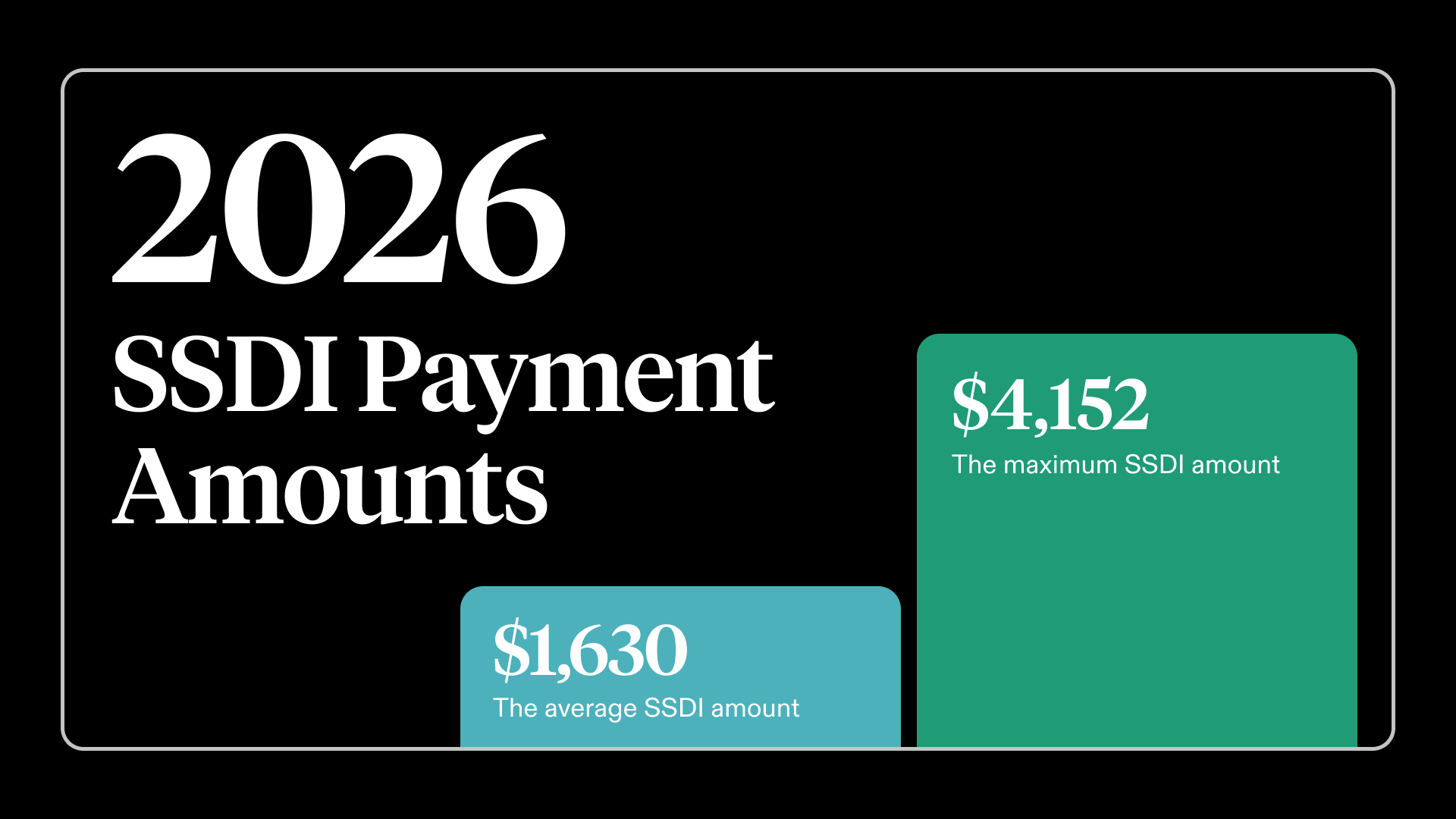
According to the latest SSA data (2024), released in 2025, the average Social Security disability benefit for people with genitourinary diseases, including kidney disease, is $1,676 per month.
The maximum disability payment you can get for kidney disease is $4,152 per month for SSDI and $994 per month for SSI in 2026. The amounts are set by law and are the same, no matter the condition, even if you qualify with multiple conditions meeting the criteria.
Your exact disability benefit payment depends on the number of years you worked, your work history, and any other income sources you have. Some people can qualify for both SSDI and SSI at the same time.
You can read our guide to how much people make on SSDI and SSI.
What if my kidney disease doesn’t meet the criteria?
If your chronic kidney disease doesn’t meet the SSA’s listed criteria, you may still qualify for disability benefits if you can show that your condition prevents you from working. The SSA ultimately evaluates whether your symptoms and limitations make it impossible for you to maintain employment—not just whether you meet a specific listing.
Keep in mind that approval can be difficult. Only about 20% of applicants are approved on their initial application. If your claim is denied, you have the right to appeal and present your case before a judge. Nearly half of applicants are approved at the hearing stage, and your chances of success are significantly higher if you work with an experienced disability lawyer.
To get you started, here’s our step-by-step guide to applying for disability.
Recommended Articles:
What Medical Conditions Qualify for Social Security Disability?

Qualifying for Disability: Everything You Should Know
Frequently asked questions about qualifying for disability
What conditions qualify for disability benefits?
Any medical condition that leaves you unable to work can qualify for Social Security disability benefits. The SSA has a list of common qualifying conditions in the Blue Book. You can also check our full guide to all the conditions that can qualify for disability.
Does my condition affect my disability benefit?
No, the medical condition you have doesn’t affect how much you get from SSDI or SSI. Where you live also doesn’t impact your check size.
How much do SSDI and SSI pay?
SSDI pays up to $3,822 per month, though the average check is about $1,500 in 2024. SSI can pay up to $943 per month in 2024. Read more about how much you can make on SSDI and SSI.
When should I apply for disability benefits?
We recommend applying for benefits as soon as you know you’ll be unable to work. The application process takes a while — a year or longer for the average person. The sooner you submit your application, the sooner you can get your benefits.
Where do I apply for disability benefits?
Apply for Social Security disability benefits online through the SSA website or in-person at your local SSA office. Get step-by-step help in our breakdown of the disability application process.
Do I need a lawyer to apply for disability?
A lawyer isn’t required and you can win benefits without a lawyer. However, the process is complicated and technical — especially when you get to a court hearing. Working with a good lawyer triples your chances of winning an appeal.
Jackie Jakab
Attorney
For Clients
For press inquiries, please email press@atticus.com.
Fields of Law
For Lawyers
At the bottom of many websites, you'll find a small disclaimer: "We are not a law firm and are not qualified to give legal advice." If you see this, run the other way. These people can't help you: they're prohibited by law from giving meaningful advice, recommending specific lawyers, or even telling you whether you need a lawyer at all.
There’s no disclaimer here: Atticus is a law firm, and we are qualified to give legal advice. We can answer your most pressing questions, make clear recommendations, and search far and wide to find the right lawyer for you.
Two important things to note: If we give you legal advice, it will be through a lawyer on our staff communicating with you directly. (Don't make important decisions about your case based solely on this or any other website.) And if we take you on as a client, it will be through a document you sign. (No attorney-client relationship arises from using this site or calling us.)
- © 2026 Atticus Law, P.C.
Terms | Privacy | California Privacy | CHD Policy | Disclaimer | This website is lawyer advertising.