Whatever It Takes: Maegan Seawright’s Advocacy for Disability Clients

Atticus is a law firm and Certified B Corp offering free, high-quality advice to Americans who can't work due to disability. Our experienced disability lawyers bring 50+ combined years of experience and help 100,000+ apply for benefits each year.
Before joining Atticus, Maegan Seawright built her career in service-oriented work, driven by the same motivation that brings so many people here: the chance to make a real impact in others’ lives. Seawright works as a non-attorney representative, guiding clients through the disability application process while also helping train internal teams and partner law firms on best practices and operational efficiencies. “I’m here because I want to serve people.” As a child, Seawright imagined a future as a veterinarian or doctor, eventually studying Evolutionary Anthropology in college with plans to pursue medicine. But after spending time in a wound care center—and then falling asleep from boredom while shadowing a surgeon in the operating room—she realized the medical field wasn’t the right fit after all.
It was her experience working in a primary care office that ultimately shifted her career path. She saw firsthand how many patients struggled to afford medications and pay bills, and Seawright wanted to help underserved people in a more holistic way beyond the doctor’s office.
“I wanted a job where I felt like people were in a different—hopefully better—space from when I first came into the picture, to after me,” she says. “I switched into nonprofit work, which I felt was a little bit more fulfilling. There’s still the battle of the need always being more than the resources, but at least I felt like I was making a difference.”
Seawright’s nonprofit career included a two-year stint with AmeriCorps, where she worked with the Servant Center supporting veterans and others experiencing homelessness as they applied for Social Security Disability benefits. Beyond helping clients navigate the application process, she also transported them to appointments and connected them with food and other essential resources.
She later served as a program manager at a sexual assault and domestic violence agency, helping victims and survivors navigate the legal system while accessing housing, food, and other critical support services. Like many in the nonprofit sector, Seawright eventually left due to high turnover, low pay, and limited resources. She learned about Atticus through a college classmate and applied for a client specialist role through LinkedIn—a position that proved to be a perfect fit. After six months guiding prospective clients over the phone, Seawright helped launch a partnerships program focused on outreach and education about Atticus and the disability application process for nonprofit organizations and medical institutions across the country.
Next, Seawright was sponsored by Atticus to take the EDPNA examination to become a certified Eligible Non-Attorney Representative. An EDPNA is one of the few areas of law where a non-attorney can practice and directly represent clients after passing the required exam. The rigorous exam covers the complex Social Security Disability rules, the application and appeals process, and medical and work-related evidence for disability claims. “I love learning, studying, and taking tests,” says Seawright. The certification made her an invaluable member of Atticus’s in-house legal team, where she brought firsthand experience completing Social Security Disability applications from her previous nonprofit roles. “At that time, no one at the company had ever filed an application, and now we file literally hundreds.”
The legal team’s goal was to better understand the disability application process and find ways to make filing more efficient and effective for both lawyers and clients by adding remarks, footnotes, and explainers to strengthen applications where additional context could be helpful. “We were building the plane as we were flying it,” recalls Seawright. “My motto is, predictability increases follow-through. So the more predictable we can make the process, the more likely clients are to follow through—and that will help with conversion." This approach of iterating and building was a sharp contrast to Seawright’s experience working in nonprofits. “It's nice being at a place where we have the resources to do what we need to do. The hardest adjustment for me was getting into the mindset of experimenting and how we can make this better. Because in the nonprofit world, you just make $1 out of 15 cents. It's not going to get better.” The team’s commitment to improving the process has been instrumental both internally and across the partner network of lawyers. “Whatever it takes, we’ll do it—that attitude has allowed us to troubleshoot and find solutions we can share with partner firms.”
From identifying dire-need cases and claims where a client’s age may affect processing timelines to filing Congressional inquiries, the team has developed strategies to expedite disability claims. That knowledge, shared with partner firms across the network, has ultimately helped thousands of clients. The legal team’s firsthand experience directly representing clients also shaped the company more broadly. Their insights informed everything from phone scripts for client specialists to a deeper understanding of what representatives look for when evaluating cases, ultimately clarifying and improving the client intake process.
Working directly with clients is one of Seawright’s greatest strengths. She brings deep expertise, empathy, and a willingness to listen—along with a trait that defines the entire team: tenacity. “That’s something we share, because we really advocate for our clients,” says Seawright, noting the Social Security Administration is constantly hanging up on them. “We get energized by running into brick walls.” She points to a recent client, Neytiri M., who won benefits after a long wait, marked by hurdles and bureaucratic delays, including a payment information mix-up after approval.
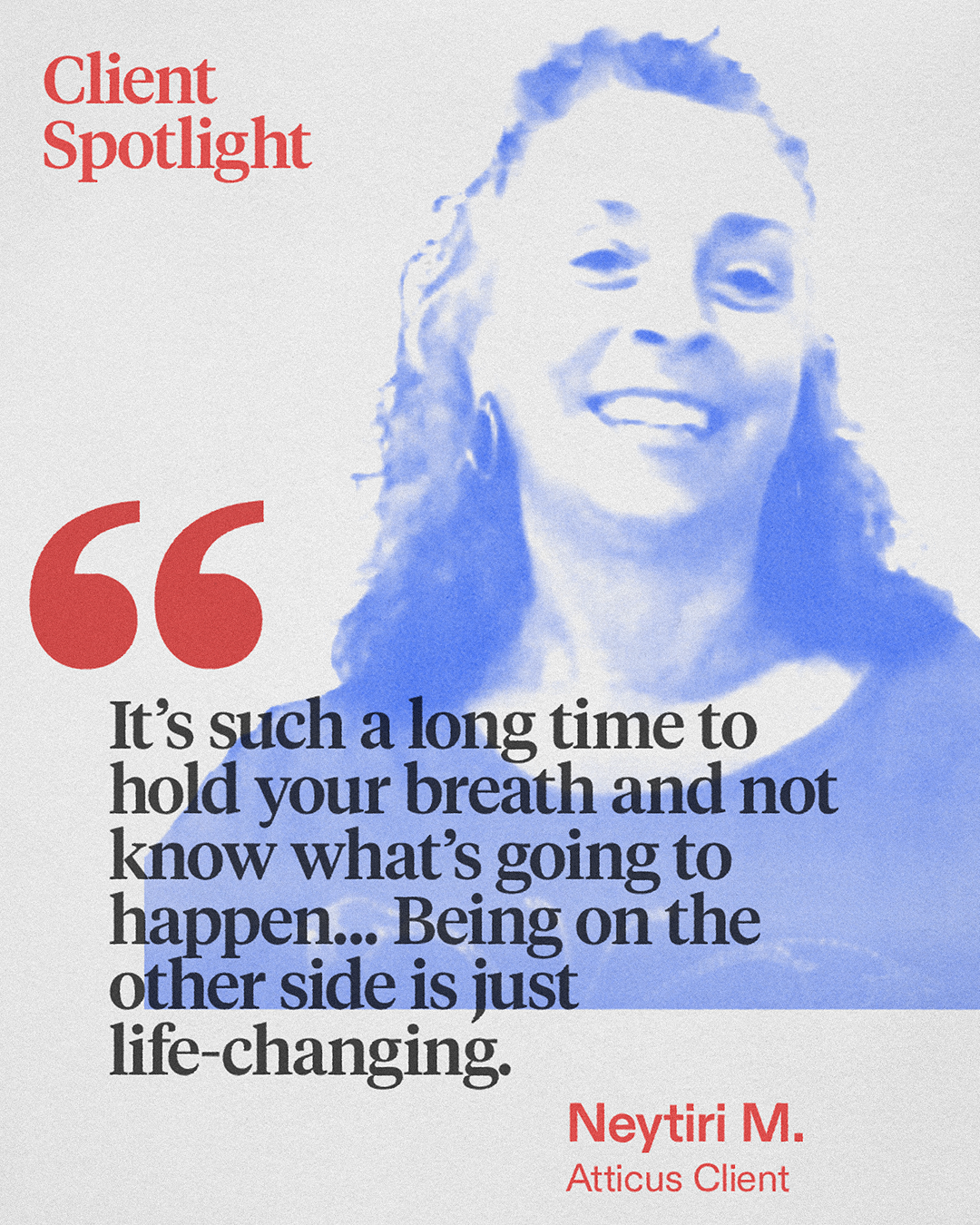
“Neytiri was in a nursing home and unable to do any of the things she wanted to do, because she didn’t have money or local support, and it was taking a toll on her physically and mentally,” says Seawright. “After we got her approved, she relocated to Mexico and is so much happier. That’s the kind of story I like. Our clients have life-changing health issues, but this is a reminder that there’s still life after.” Neytiri credits her turnaround to Seawright: “She was like a friend to me. She was a light in the dark. She was just so personable and responsive. Even on a weekend, she responded to me at one point when I was just feeling like I was at my wits’ end, and just always so warm and genuine and reassuring. She really helped me get through the process.”
For Seawright, stories like Neytiri’s are what keep her motivated through the bureaucracy and setbacks. Behind every application is a person trying to reclaim stability, independence, and hope. Helping clients reach that point is still the most meaningful part of the job.
Allison Considine
Journalist and Content Lead
For Clients
For press inquiries, please email press@atticus.com.
Fields of Law
For Lawyers
At the bottom of many websites, you'll find a small disclaimer: "We are not a law firm and are not qualified to give legal advice." If you see this, run the other way. These people can't help you: they're prohibited by law from giving meaningful advice, recommending specific lawyers, or even telling you whether you need a lawyer at all.
There’s no disclaimer here: Atticus is a law firm, and we are qualified to give legal advice. We can answer your most pressing questions, make clear recommendations, and search far and wide to find the right lawyer for you.
Two important things to note: If we give you legal advice, it will be through a lawyer on our staff communicating with you directly. (Don't make important decisions about your case based solely on this or any other website.) And if we take you on as a client, it will be through a document you sign. (No attorney-client relationship arises from using this site or calling us.)
- © 2026 Atticus Law, P.C.
Terms | Privacy | California Privacy | CHD Policy | Disclaimer | This website is lawyer advertising.